
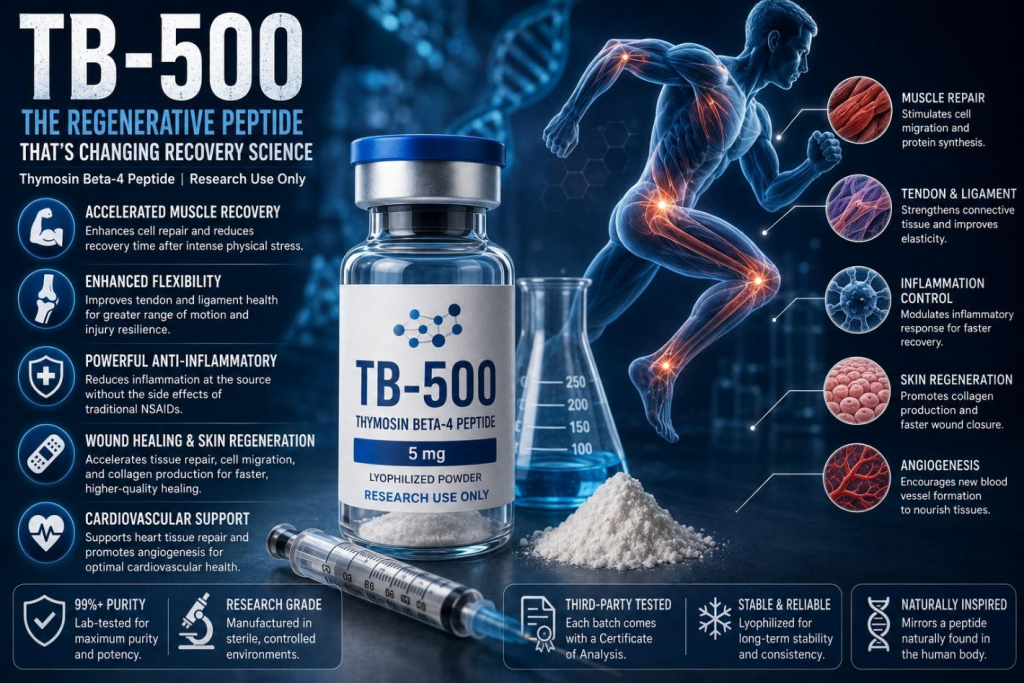
When scientists first began mapping the human body’s natural repair mechanisms, they discovered something extraordinary — a tiny protein fragment with outsized potential. Today, researchers worldwide recognize thymosin beta 4 peptide as one of the most exciting tools in regenerative medicine. Known commercially as TB-500, this synthetic version of a naturally occurring compound has captured attention for its remarkable ability to support tissue repair, reduce inflammation, and accelerate recovery at the cellular level.
What Is TB-500 and How Does It Work?
TB-500 is a synthetic analog of Thymosin Beta-4, a protein naturally present in virtually all human and animal cells. This peptide plays a foundational role in wound healing, cell migration, and tissue regeneration. What makes it particularly fascinating is its upregulation of actin — a vital protein that forms the structural framework of cells. By promoting actin production, TB-500 helps cells move efficiently to injury sites, essentially directing the body’s internal repair crew exactly where it’s needed most.
Unlike many compounds that target single pathways, TB-500 operates through multiple biological channels simultaneously. It modulates inflammatory responses, encourages angiogenesis (the formation of new blood vessels), and supports collagen deposition. This multi-target approach explains why researchers observe such broad-spectrum benefits across diverse tissue types.
The Remarkable Benefits Researchers Are Documenting
The scientific community continues to uncover compelling evidence supporting TB-500’s therapeutic potential. Here are the standout advantages driving research interest:
Accelerated Muscle Recovery — Athletes and active individuals push their bodies to the limit, creating microscopic tears in muscle fibers. TB-500 appears to significantly shorten recovery windows by enhancing cellular repair processes. Research subjects demonstrate faster return to baseline performance following intense physical stress.
Enhanced Tissue Flexibility — One of TB-500’s most celebrated properties is its positive impact on connective tissue. Studies indicate improved flexibility in tendons and ligaments, potentially reducing injury susceptibility while supporting greater range of motion.
Powerful Anti-Inflammatory Properties — Chronic inflammation underlies countless degenerative conditions. TB-500 demonstrates potent anti-inflammatory effects without the harsh side effects associated with traditional NSAIDs. This positions it as an attractive candidate for managing inflammatory conditions naturally.
Wound Healing and Skin Regeneration — From surgical incisions to surface injuries, TB-500 accelerates closure rates and improves cosmetic outcomes. Its ability to stimulate keratinocyte migration makes it valuable in dermatological research.
Cardiovascular Support — Emerging studies suggest TB-500 may promote cardiac tissue repair following injury, opening fascinating possibilities for heart health applications.
Why Leading Labs Choose This Compound
Research facilities prioritize consistency, purity, and documented efficacy. TB-500 meets these criteria through well-established synthesis protocols and extensive peer-reviewed literature. The compound’s stability during storage and predictable behavior in biological assays make it an ideal candidate for controlled studies.
Furthermore, TB-500’s natural origin — it mirrors a compound already present in the body — contributes to its favorable safety profile in research settings. Scientists appreciate working with molecules that the body recognizes rather than foreign synthetic chemicals.
Understanding the Research Landscape
As interest grows, so does the volume of scientific inquiry. Comprehensive thymosin beta-4 tb-500 preclinical studies safety concerns fda evaluations continue to shape our understanding of optimal dosing, administration protocols, and long-term implications. The regulatory framework surrounding research peptides evolves alongside scientific discovery, ensuring that future applications meet rigorous safety standards.
Quick Answers: What You Need to Know
What exactly is TB-500?
TB-500 is a synthetic version of Thymosin Beta-4, a naturally occurring peptide that regulates cell repair, reduces inflammation, and supports tissue regeneration throughout the body.
How does TB-500 support recovery?
It upregulates actin production, enabling cells to migrate efficiently to damaged areas while promoting new blood vessel formation and collagen synthesis.
Is TB-500 safe for research purposes?
Preclinical studies demonstrate a favorable safety profile, though it remains designated for laboratory research and hasn’t received FDA approval for human consumption.
What tissues benefit most from TB-500?
Muscle, tendon, ligament, skin, and cardiovascular tissues show particularly promising responses in research models.
How is TB-500 administered in studies?
Researchers typically utilize subcutaneous injection protocols, though specific methodologies vary by study design and research objectives.
The Future of Regenerative Peptide Research
We’re standing at an exciting intersection where molecular biology meets practical healing. TB-500 exemplifies how understanding the body’s natural processes can lead to powerful research tools. As laboratories continue publishing findings and refining protocols, the therapeutic landscape for injury recovery, tissue regeneration, and inflammation management looks increasingly promising.
For research facilities, biohackers, and scientific professionals seeking to explore the frontiers of regenerative medicine, TB-500 offers a compelling avenue of investigation. Its unique mechanism of action, broad applicability, and growing body of supportive literature position it as a cornerstone compound in modern peptide research.
The journey from laboratory bench to breakthrough therapy is rarely straightforward, but compounds like TB-500 remind us why the pursuit matters. Every recovered muscle, every healed wound, and every reduced inflammatory response represents a step toward better human health.

